
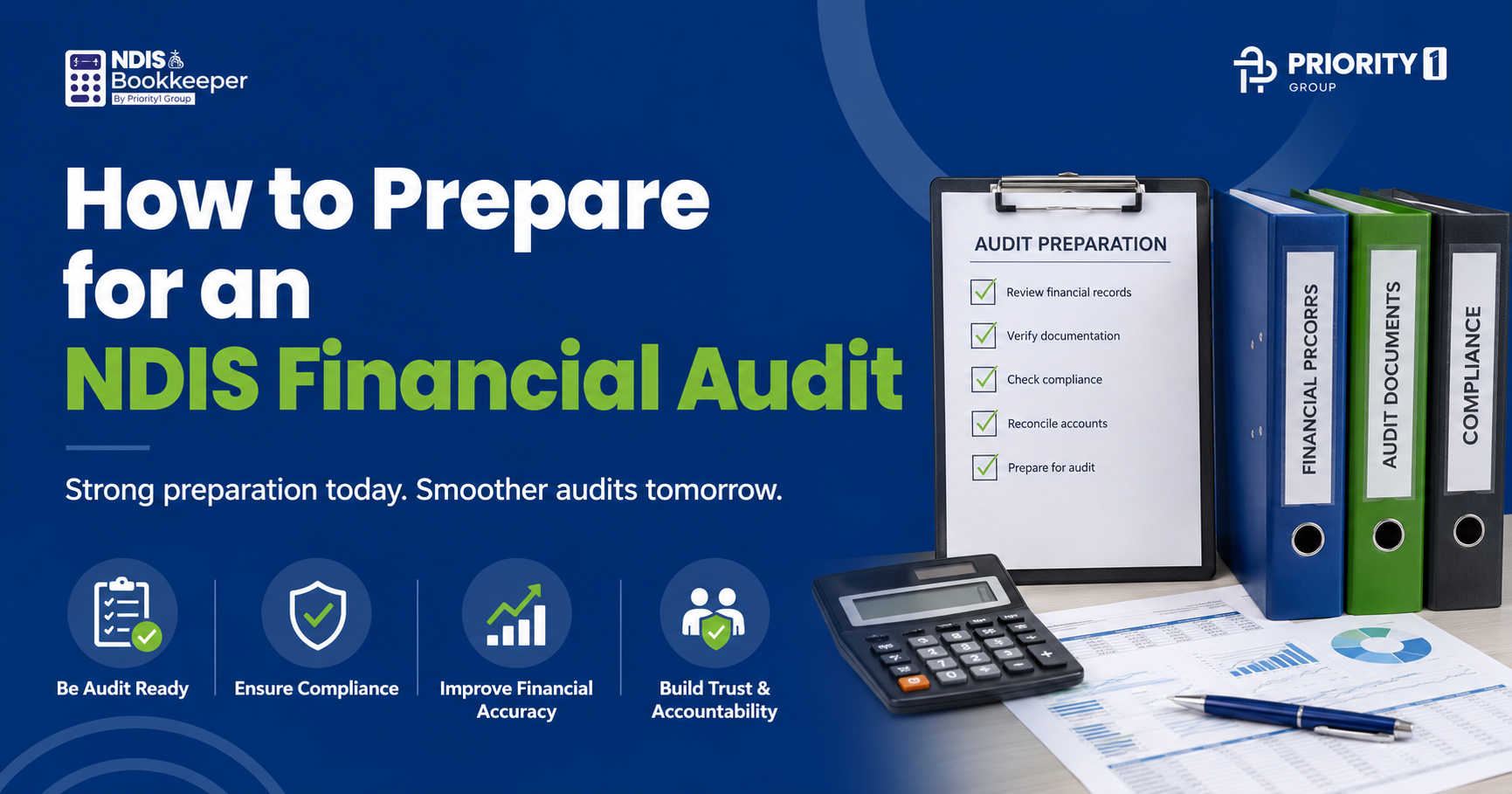
For many NDIS providers, the thought of a financial audit can feel overwhelming. However, audits are not designed to catch organisations off guard. Instead, they serve as an important mechanism for confirming that financial records are accurate, compliance obligations are being met, and participant funding is being managed responsibly.
As the NDIS sector continues to mature, expectations around governance, transparency, and accountability continue to increase. Providers must be able to demonstrate that their financial systems support both regulatory compliance and quality service delivery. An organisation that is prepared for an audit is often an organisation that has strong financial practices in place year-round.
Rather than viewing audits as isolated events, providers should see them as part of an ongoing commitment to good financial management. Consistent processes, organised documentation, and proactive monitoring can make the audit process significantly smoother while strengthening the organisation overall.
This article outlines practical steps providers can take to prepare for financial audits and improve audit readiness throughout the year.
A financial audit focuses on whether an organisation’s financial information is accurate, reliable, and supported by appropriate evidence. Auditors typically assess financial records, payroll processes, supporting documentation, reporting practices, and internal controls to determine whether systems are operating effectively.
The audit process also evaluates whether the organisation has sufficient safeguards in place to minimise errors, reduce risk, and maintain compliance with relevant obligations. Providers that understand these objectives are often better prepared because they can focus their efforts on maintaining strong systems throughout the year rather than scrambling to gather information at the last minute.
A successful audit is often the result of consistent financial management rather than extensive preparation immediately before the review.
One of the most important aspects of audit preparation is maintaining well-organised documentation. Auditors often request evidence to support financial transactions, payroll records, and reporting information.
Key documents typically include:
When records are organised and easily accessible, providers can respond to auditor requests efficiently and reduce delays during the review process.
Maintaining digital document storage systems can further improve accessibility while reducing the risk of lost or incomplete records.
Many organisations make the mistake of preparing for an audit only after receiving notification that one is approaching. This approach can create unnecessary pressure and increase the likelihood of missing information.
Audit readiness should be embedded into everyday operations. Regular reconciliations, timely reporting, documentation management, and internal reviews all contribute to stronger financial records and improved compliance outcomes.
Providers that maintain audit readiness throughout the year often benefit from greater confidence in their financial information, improved operational efficiency, and fewer compliance concerns.
Preparation should be viewed as an ongoing process rather than a one-time project.
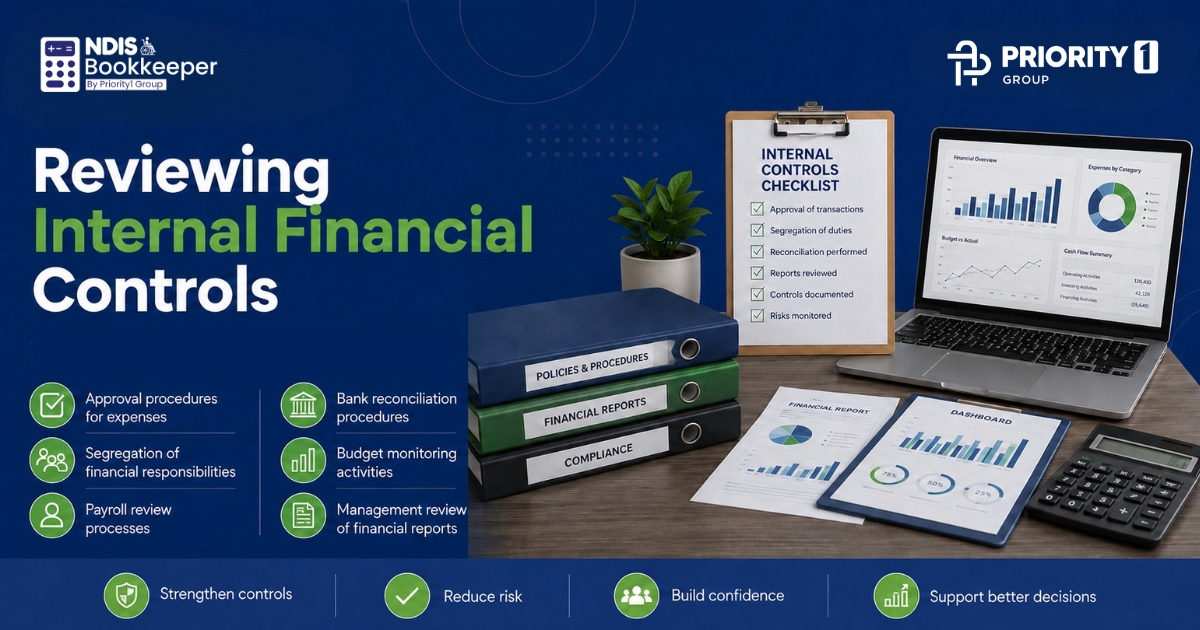
Strong internal controls demonstrate that financial activities are being managed responsibly and consistently.
Examples of effective controls include:
These controls help reduce the likelihood of errors while providing assurance that financial transactions are being handled appropriately.
Regular reviews of internal controls also help organisations identify weaknesses before they become significant compliance concerns.
Payroll is frequently one of the most closely examined areas during a financial audit. Employee records, pay rates, leave balances, superannuation obligations, and payroll calculations must all be accurate and supported by appropriate documentation.
Even minor payroll errors can create compliance issues if they occur repeatedly over time. Providers should regularly review payroll records to ensure that staff classifications, overtime calculations, leave entitlements, and payment histories remain accurate.
Organisations looking to strengthen payroll processes can gain valuable insights from The Payroll Mistakes That Cost Businesses Time & Money, which highlights common payroll challenges and strategies for avoiding costly errors.
Maintaining payroll accuracy throughout the year can significantly reduce audit-related risks and improve organisational confidence.
Outdated financial records are one of the most common causes of audit difficulties. Delayed reconciliations, incomplete reporting, and unresolved discrepancies can create unnecessary complications during the audit process.
Providers should ensure that financial information is reviewed regularly and that all transactions are recorded accurately and promptly. This includes reconciling bank accounts, reviewing outstanding invoices, monitoring expenses, and verifying reporting accuracy.
Keeping records current not only improves audit readiness but also supports better financial decision-making throughout the year.
Reliable information allows management teams to identify trends, monitor performance, and respond to emerging challenges more effectively.
Audit readiness is closely connected to financial health. Organisations that regularly review financial performance are often better positioned to identify issues before they become significant concerns.
Important areas to monitor include revenue, expenses, cash flow, budget performance, and service delivery costs. Maintaining visibility over these areas allows providers to make informed decisions while supporting both operational sustainability and participant outcomes.
Many providers face the challenge of balancing financial performance with quality service delivery. The article NDIS Accounting: Balancing Service Delivery & Financial Health provides useful insights into maintaining this balance while supporting long-term organisational success.
Strong financial monitoring creates a solid foundation for both compliance and growth.
Internal reviews can help organisations identify potential issues before an external auditor does.
Benefits of conducting regular internal reviews include:
Internal reviews provide valuable opportunities to strengthen systems, improve processes, and address weaknesses before they affect audit outcomes.
Many organisations incorporate periodic internal assessments into their annual compliance and governance activities.
As organisations grow, audit preparation often becomes more complex. Increased transaction volumes, larger workforces, and expanding service offerings can create additional financial management challenges.
Many providers choose to work with an Outsourced bookkeeper to improve financial organisation, strengthen documentation practices, and support ongoing compliance efforts. Professional support can assist with reconciliations, reporting, payroll oversight, record management, and process improvement initiatives.
External expertise can also provide an objective perspective on existing systems and help identify opportunities for improvement before an audit occurs.
This proactive approach often contributes to smoother audits and stronger financial management outcomes.
Accurate reporting is essential for demonstrating accountability and maintaining trust with regulators, stakeholders, and participants.
A qualified NDIS bookkeeper can help ensure that financial information remains accurate, timely, and supported by appropriate documentation. Strong reporting practices not only support audit readiness but also improve visibility into organisational performance.
When leaders have confidence in their financial information, they are better equipped to make strategic decisions, allocate resources effectively, and manage future growth opportunities.
Accurate reporting supports both compliance objectives and long-term organisational success.
Preparing for an audit should not be viewed solely as a compliance exercise. It is an opportunity to strengthen financial systems, improve governance practices, and enhance organisational accountability.
Effective NDIS bookkeeping supports this objective by ensuring financial records remain organised, reconciled, and aligned with compliance requirements throughout the year.
Providers that invest in strong financial systems, regular reviews, and ongoing process improvements often find that audits become significantly less stressful and more predictable over time.
The goal is not simply to pass an audit but to create systems that support sustainable operational success.
An NDIS financial audit is far easier to manage when preparation becomes part of everyday operations. Organisations that maintain organised records, accurate reporting practices, strong internal controls, and ongoing compliance monitoring are often better prepared for audit reviews and regulatory requirements.
Rather than waiting until an audit is scheduled, providers should focus on building systems that support year-round accountability and financial accuracy. This approach strengthens governance, reduces risk, and improves overall organisational performance.
For providers seeking specialist support tailored to the disability sector, NDIS Bookkeeper by Priority1 Group offers professional financial management solutions designed to improve compliance, strengthen reporting practices, and support ongoing audit readiness.