
Managing an NDIS business is not just about delivering quality care, it is about ensuring that your financial planning aligns closely with your service goals. Many providers struggle with balancing participant needs, operational costs, and compliance requirements while maintaining financial stability.
Aligning your NDIS budget with your service delivery goals ensures that your organisation can operate efficiently, remain compliant, and continue to provide high-quality support to participants. Without this alignment, businesses often face issues such as cash flow gaps, overspending in certain areas, and underutilisation of available funding.
In this guide, we’ll explore how NDIS providers can structure their budgets effectively, avoid common pitfalls, and create a system that supports both financial health and participant outcomes.
NDIS budgets are not just financial documents, they are strategic tools that guide how services are delivered. When budgets are not aligned with service goals, providers may experience inefficiencies that impact both operations and participant satisfaction.
A well-aligned budget helps providers:
When financial planning and service delivery work together, businesses gain better control over their operations and can plan for sustainable growth.
To align your budget effectively, it’s important to understand how NDIS funding is structured. Participant plans are typically divided into three main categories:
Each category has specific guidelines on how funds can be used. Misalignment often occurs when providers fail to track spending across these categories accurately or when services are delivered without proper financial planning.
This is where structured bookkeeping for NDIS becomes essential. It ensures that every expense is tracked, every claim is accurate, and funding is utilised correctly.
Many NDIS providers face challenges when trying to align budgets with their service goals. These gaps often arise due to a lack of structured systems or clear financial visibility.
One of the most common issues is overspending in certain service areas while underutilising funds in others. This imbalance can affect participant outcomes and create unnecessary financial pressure.
Another challenge is delayed invoicing or incorrect claims, which disrupt cash flow and create discrepancies. If not addressed promptly, these issues can lead to compliance risks. Understanding how to handle such issues is crucial, and this resource on: handling NDIS financial discrepancies provides useful insights into identifying and resolving these challenges.
In many cases, the root problem is not the budget itself, but the lack of integration between financial planning and daily operations.
To ensure your budget supports your service delivery effectively, it is important to follow a structured approach.
Every service delivered should be clearly mapped to the relevant funding category. This ensures that:
This level of clarity prevents confusion and ensures that resources are allocated appropriately.
Without real-time insights, it becomes difficult to track whether your budget is being used effectively. Providers should regularly monitor:
Having access to up-to-date financial data allows for better decision-making and prevents overspending.
Staffing is one of the largest expenses for NDIS providers. Aligning rostering with budget allocation ensures that labour costs remain within limits while still meeting participant needs.
This involves:
Creating a budget that aligns with service goals requires more than just planning, it requires consistent execution.
Start by identifying your service goals. What outcomes are you aiming to achieve for your participants? Your budget should be designed to support these objectives.
Break down your budget into specific categories, including staffing, administration, and service delivery. This ensures that all costs are accounted for and managed effectively.
Budgets should not be static. Regular reviews allow you to adjust allocations based on changes in participant needs or operational requirements.
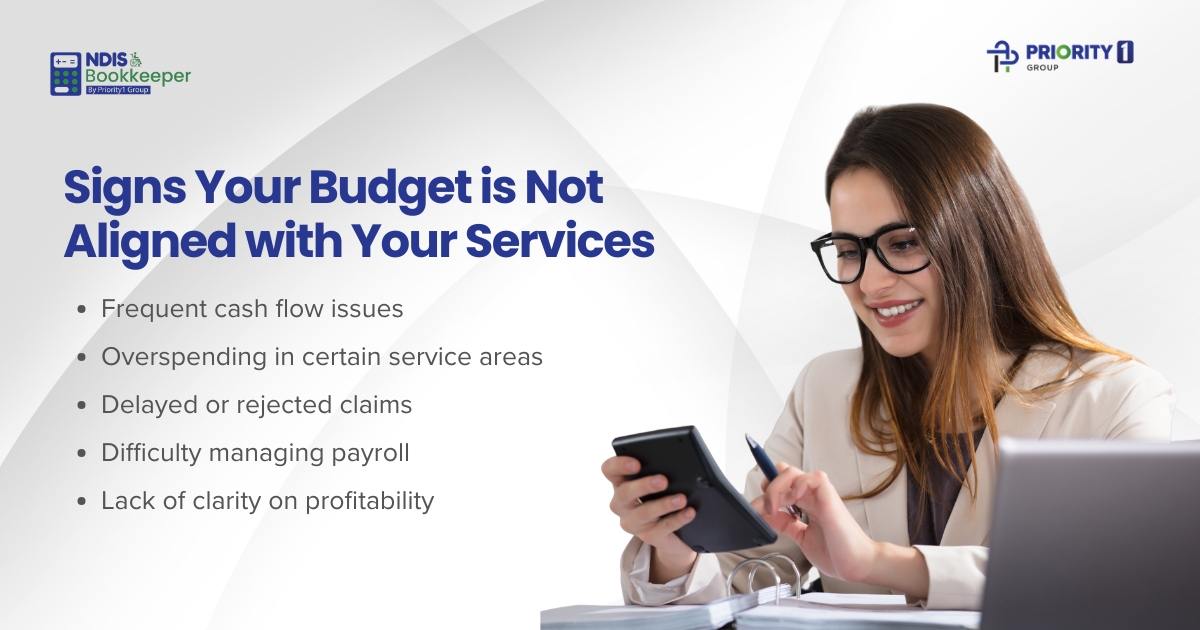
Many providers do not realise their budget is misaligned until issues start affecting operations. Some common signs include:
These indicators suggest that financial systems need to be reviewed and improved.
As NDIS businesses grow, managing financial processes internally can become overwhelming. This is where working with an Outsourced bookkeeper becomes highly beneficial.
An outsourced professional brings structure, expertise, and consistency to financial management. They help ensure that your budget is not only accurate but also aligned with your service delivery goals.
They can support your business by:
To understand how outsourcing supports financial clarity, you can explore this detailed guide on: what an outsourced bookkeeper actually does
Financial management in the NDIS sector is not just about numbers, it is about understanding the system, compliance requirements, and operational challenges.
A professional bookkeeper ndis plays a key role in ensuring that financial processes support both compliance and service delivery. They provide clarity, reduce errors, and help businesses make informed decisions.
With the right financial expertise, providers can move from reactive management to a more structured and strategic approach.
The NDIS sector is evolving, and financial management practices are evolving with it. Providers are increasingly adopting digital systems that offer real-time insights and improve efficiency.
There is also a growing focus on compliance and transparency. Regulators expect providers to maintain accurate records and demonstrate proper use of funds.
Another key trend is the integration of financial systems with operational tools such as rostering and payroll. This ensures that all aspects of the business are aligned, reducing inefficiencies.
To create a sustainable NDIS business, your financial systems must support long-term growth. This involves:
When your financial model is strong, your business becomes more stable, scalable, and capable of delivering consistent care.
Aligning your NDIS budget with service goals is essential for maintaining efficiency, compliance, and sustainable growth. Without proper alignment, businesses face challenges that can impact both financial stability and participant outcomes.
Partnering with a professional NDIS Bookkeeper by Priority1 Group ensures accurate financial management and supports NDIS providers in maintaining compliance, growing their business, and providing high-quality care to participants.