
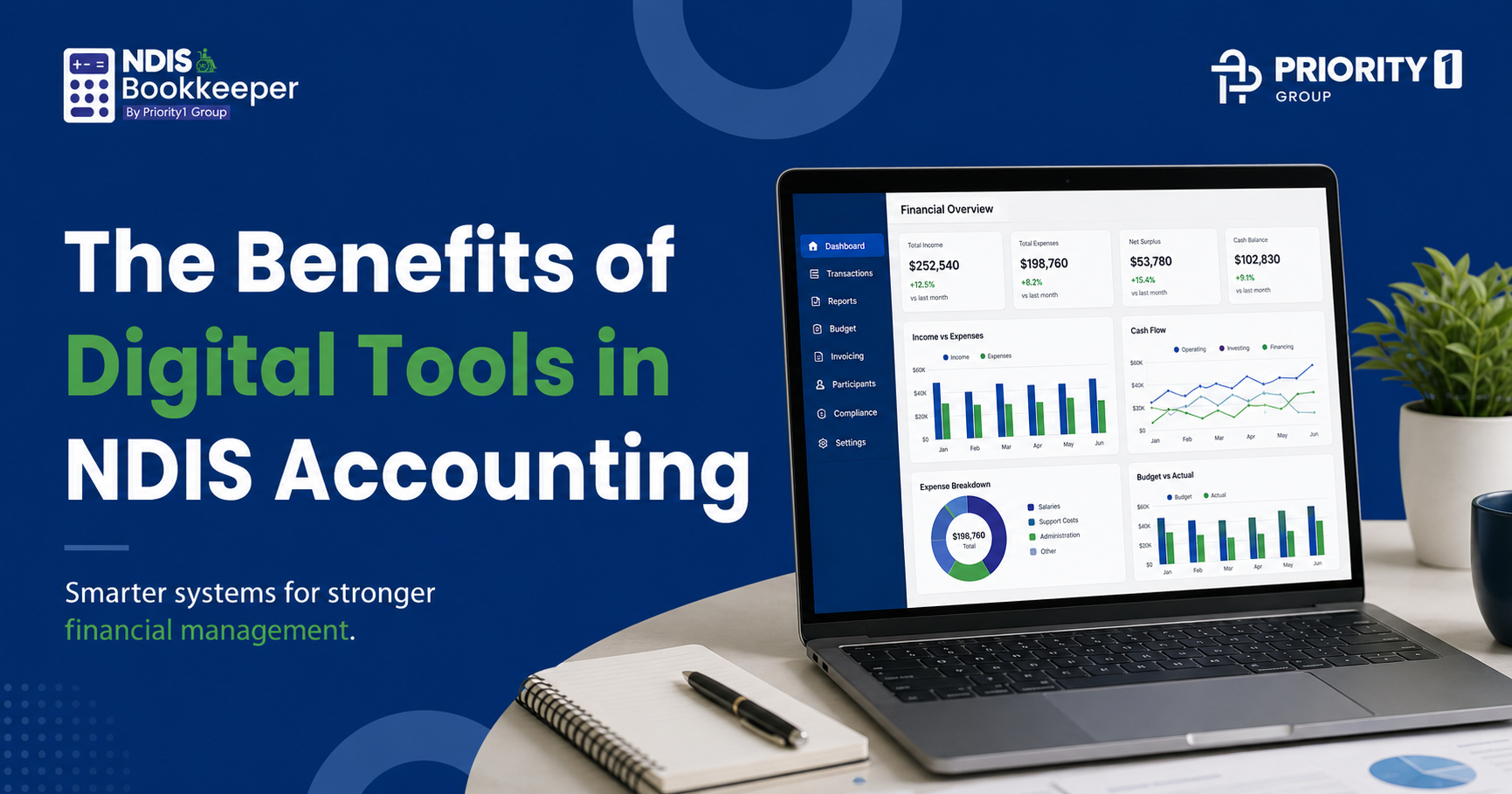
The way NDIS providers manage their finances has changed dramatically over the past decade. What was once handled through spreadsheets, paper records, manual calculations, and disconnected systems is increasingly being replaced by integrated digital platforms that simplify financial management and improve operational efficiency.
As providers grow, so do their administrative responsibilities. Managing participant funding, payroll, invoicing, reconciliations, compliance documentation, and financial reporting can quickly become time-consuming when relying on outdated processes. Digital tools help reduce this burden by automating routine tasks and providing easier access to important financial information.
For NDIS organisations, technology is no longer simply a convenience. It has become a practical necessity for maintaining efficiency, improving accuracy, and supporting sustainable growth. The organisations that successfully embrace digital transformation are often better positioned to focus on participant outcomes rather than administrative workloads.
This article explores how digital tools are reshaping financial management within the disability sector and why technology has become an important component of modern business operations.
Many organisations begin with basic financial systems that work effectively when operations are small. However, as participant numbers increase and service delivery expands, manual processes often become difficult to manage.
Paper-based systems and spreadsheets can create several challenges:
Manual processes often require staff to spend valuable hours performing repetitive administrative tasks. Over time, these inefficiencies can affect productivity, increase costs, and limit an organisation’s ability to scale.
Digital tools address these challenges by streamlining workflows and reducing reliance on manual intervention.
Spreadsheets remain useful for many tasks, but they are often not designed to manage the growing complexity of NDIS financial operations.
As organisations expand, spreadsheets can become difficult to maintain due to:
Modern accounting platforms provide a more structured environment where financial data can be stored, updated, and analysed in real time.
This transition allows organisations to spend less time managing data and more time using information to improve business performance.
Cloud technology has changed the way organisations access and manage financial information.
Unlike traditional desktop systems, cloud-based platforms allow authorised users to access information securely from virtually any location. This flexibility is particularly valuable for providers operating across multiple locations or supporting remote teams.
Cloud accounting offers benefits such as:
These advantages help organisations remain agile while ensuring financial information remains accessible when needed.
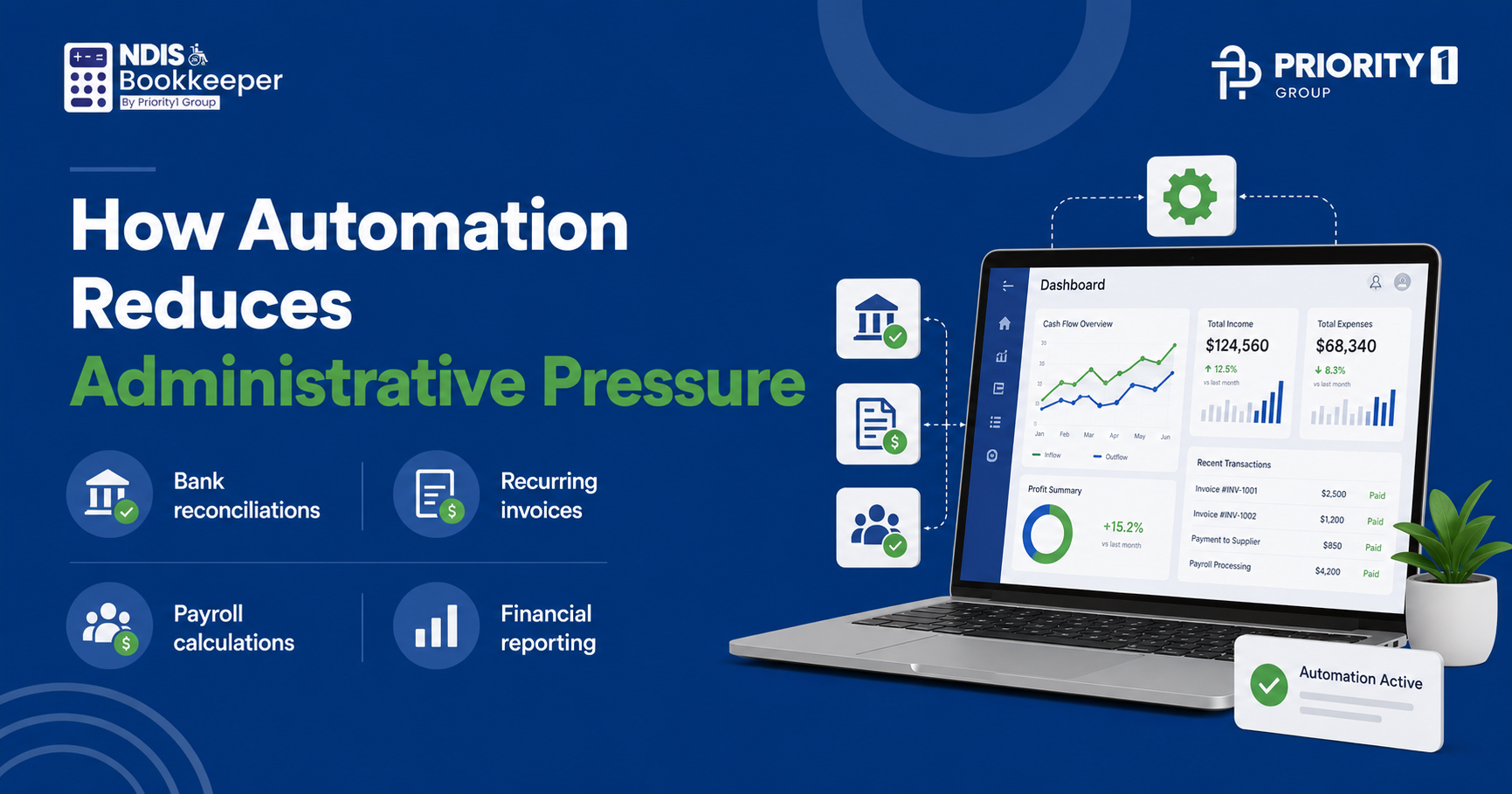
One of the most significant advantages of digital tools is automation. Tasks that once required hours of manual work can now be completed automatically through integrated systems.
Automation can support:
By reducing repetitive tasks, organisations can redirect resources toward activities that add greater value to participants and the business.
Automation also helps improve consistency and reduces the likelihood of human error.
Technology works best when combined with efficient processes. Digital tools allow organisations to create structured workflows that improve communication and reduce bottlenecks across departments.
Many providers find that partnering with an Outsourced bookkeeper helps maximise the value of digital systems by ensuring workflows are configured correctly and financial information is managed consistently.
Providers looking to improve operational efficiency can gain valuable insights from our article on streamlining business operations through financial workflows, which explores how structured financial processes support business growth.
Efficient workflows create greater consistency and help organisations manage increasing workloads without significantly increasing administrative overhead.
One of the greatest strengths of modern technology is integration.
Digital platforms can connect multiple business functions into a single ecosystem, including:
When systems communicate with one another, information flows more efficiently throughout the organisation.
This reduces duplication, improves accuracy, and creates a more complete picture of organisational performance.
Integrated systems also reduce the need for manual data transfers, helping minimise errors and save time.
Document management is often overlooked when discussing financial technology, yet it plays a critical role in maintaining organised operations.
Digital storage systems allow organisations to securely maintain:
Instead of searching through physical files or multiple folders, authorised staff can access required information quickly and efficiently.
Digital record keeping also supports stronger audit readiness by ensuring documents are stored systematically and can be retrieved when required.
Technology alone does not create successful outcomes. Staff must understand how to use systems effectively if organisations are to realise their full benefits.
Training plays an important role in ensuring teams can:
Organisations seeking to improve staff capability may benefit from our guide on training your team on NDIS financial management, which outlines practical approaches to building financial awareness within the workplace.
When technology and staff capability develop together, organisations often achieve stronger results.
Modern accounting platforms generate large amounts of useful information. The challenge is turning that information into actionable insights.
Digital reporting tools help organisations monitor:
These insights allow management teams to make decisions based on current information rather than historical assumptions.
Data-driven decision-making supports more effective planning and helps organisations respond quickly to changing circumstances.
Growth is a common objective for many NDIS providers. However, growth often increases administrative complexity.
Without appropriate systems, expanding operations can lead to:
Many growing organisations choose to outsource NDIS bookkeepers because specialist support can help manage increasing financial complexity while maintaining consistency and control.
Combined with digital tools, this approach allows providers to scale operations more effectively without significantly increasing administrative workloads.
The expectations placed on providers continue to evolve. Organisations are expected to deliver quality services while maintaining strong financial management practices.
Today, effective bookkeeping for NDIS providers requires more than recording transactions. It involves using technology to improve visibility, streamline operations, support reporting, and create systems that can adapt as the organisation grows.
Providers that embrace digital transformation often gain competitive advantages through improved efficiency, stronger financial controls, and better access to business information.
Technology has become an important enabler of modern financial management and organisational success.
The next generation of financial technology is already beginning to influence the sector.
Emerging developments include:
These innovations will continue to reduce administrative workloads while providing organisations with deeper insights into financial performance.
Providers that remain open to adopting new technologies are likely to be better positioned to navigate future industry changes.
Digital tools have fundamentally changed how organisations manage financial operations. From automation and cloud-based platforms to integrated systems and advanced reporting capabilities, technology provides practical solutions for improving efficiency and reducing administrative burdens.
For NDIS providers, these tools support stronger financial management by simplifying processes, improving access to information, and enabling more informed decision-making. As organisations continue to grow and adapt, digital technology will remain an important part of creating sustainable and efficient operations.
While technology is only one component of effective financial management, it provides the foundation needed to support modern business practices and future growth.
For providers seeking specialist support tailored to the disability sector, NDIS Bookkeeper by Priority1 Group helps organisations strengthen financial processes, improve operational efficiency, and maximise the value of their digital accounting systems.