
Running an NDIS business is a significant responsibility that requires expertise in multiple areas, particularly in managing finances. As an NDIS provider, you need to ensure that your financial processes are not only efficient but also fully compliant with the stringent regulations governing the industry. This is where the importance of professional bookkeeping for the NDIS providers becomes apparent.
In this blog, we’ll explore how to create a solid financial plan for your NDIS business, the unique challenges you face, and why having a specialised bookkeeper can make all the difference in maintaining compliance and supporting business growth.
Bookkeeping for NDIS providers is not your standard accounting task. Unlike general bookkeeping, NDIS bookkeeping involves managing a complex set of financials that are unique to the disability support sector. Your business may deal with a mix of funding sources, including participant plans, government funding, and private payments, all of which require accurate tracking and reporting.
Proper bookkeeping ensures that NDIS providers can meet compliance standards, avoid penalties, and plan for the future. When your bookkeeping is in order, you gain a clear understanding of your business’s financial health, helping you make better-informed decisions and ensuring that you can continue delivering high-quality care to your participants.
One of the most important aspects of running an NDIS business is ensuring compliance with NDIS regulations. Non-compliance can lead to significant fines or even loss of registration as an NDIS provider. Professional NDIS bookkeepers like Outsourced Bookkeeper are well-versed in these regulations and can help you navigate the complexities of funding, claims, and invoicing.
With multiple revenue streams to track, accurate financial reporting is crucial. Professional bookkeepers help you maintain precise records of all transactions, ensuring that you can easily generate reports required for audits and funding claims. This can also be beneficial for tracking cash flow and planning for future growth.
Outsource NDIS bookkeepers allows you to focus on what you do best—caring for your participants. Managing finances, especially for a growing NDIS business, can be time-consuming. By entrusting this task to a professional, you save time and resources that can be better invested in improving your service delivery.
A professional bookkeeper can assist with budgeting and financial forecasting, helping you understand where your business is headed financially. These insights can guide decisions on expanding services, hiring additional staff, or investing in new technologies to better serve your clients.
Managing finances in an NDIS business comes with its own set of challenges. Without expert guidance, it’s easy to make mistakes that can result in financial strain or compliance issues. Here are some common mistakes that NDIS providers often make:
NDIS funding is often broken down into various categories, such as core supports, capital supports, and capacity building. Failure to properly track how funds are allocated can lead to discrepancies in reporting, and potentially, non-compliance with NDIS guidelines. This can result in funds being used for non-eligible purposes or claims being denied.
NDIS providers are required to maintain detailed documentation for all services delivered, including timesheets, service agreements, and participant plans. Inadequate or incomplete documentation can lead to delays in claims or issues during audits. A professional bookkeeper will ensure that all necessary documents are properly stored and accessible.
Many NDIS providers fail to effectively manage their cash flow, particularly in the early stages of their business. Managing income and expenses to ensure that you can cover operational costs while maintaining the level of service your participants expect is critical. A solid financial plan, supported by accurate bookkeeping, can help you maintain healthy cash flow and avoid financial difficulties.
NDIS providers often neglect their tax obligations, including Goods and Services Tax (GST) and payroll tax. Professional bookkeepers are skilled in handling these taxes and ensuring that all applicable taxes are accounted for in your financial reports. This reduces the risk of tax-related issues with the Australian Taxation Office (ATO).
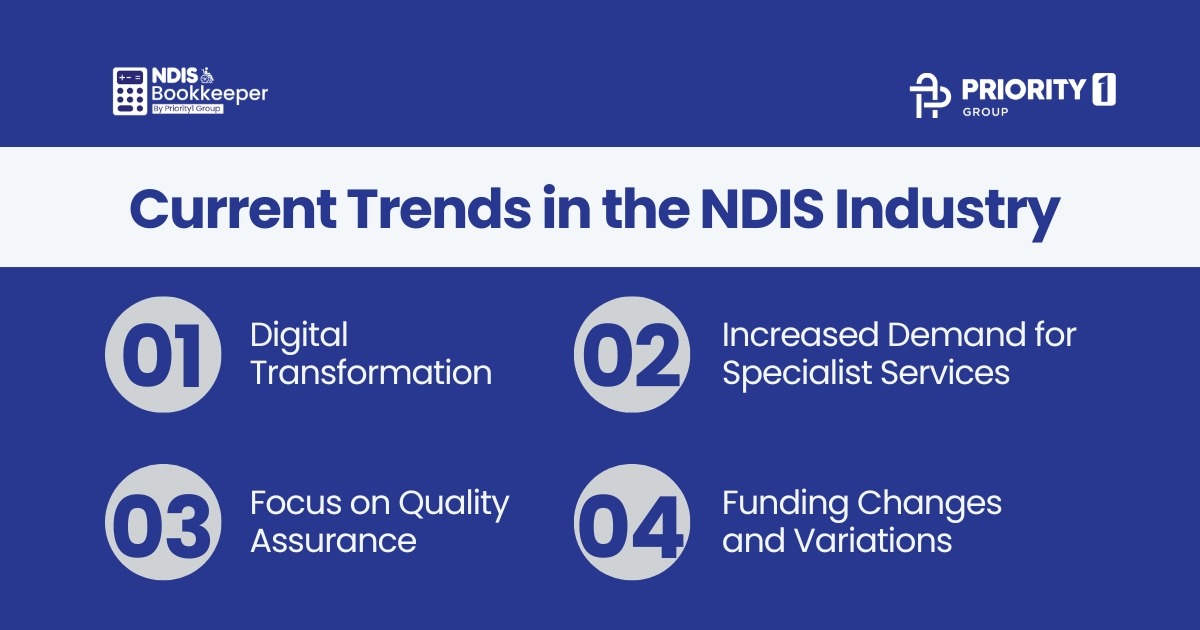
As an NDIS provider, it’s essential to stay informed about current trends in the sector to ensure your business remains competitive and compliant. Here are some of the key trends that could impact your financial planning:
Many NDIS providers are embracing digital tools and software to streamline their operations. From online invoicing and claims submission to using cloud-based bookkeeping systems, digital tools are helping providers manage their finances more efficiently. Investing in these technologies can help reduce errors, save time, and improve overall financial management.
With the NDIS expanding to support more individuals with diverse needs, there is a growing demand for specialised services. Providers offering services in areas such as mental health, complex care and assistive technologies are experiencing increased demand. This requires careful financial planning to ensure that your business can scale to meet this demand while maintaining compliance.
The NDIS Quality and Safeguards Commission ensures that providers meet high standards of service delivery. As a result, providers are increasingly focusing on maintaining quality assurance frameworks. While this improves care, it also means that providers need to allocate additional resources toward compliance, training, and reporting, all of which require accurate financial management.
The NDIS funding system is not static, and changes to funding amounts, participant plans, or the inclusion of new services can directly impact your financial planning. Staying updated on funding changes and understanding how they affect your business operations is crucial for maintaining financial stability and compliance.
To create a sound financial plan for your NDIS business, consider the following best practices:
Many NDIS providers find that outsourcing their bookkeeping needs is a cost-effective solution. Hiring an expert bookkeeper allows you to focus on what matters most providing quality care to participants while ensuring that your finances are well-managed. Professional bookkeepers can handle everything from invoicing and payroll to GST and funding claims.
Investing in financial management software designed for NDIS providers can help streamline your bookkeeping processes. Look for software that integrates with your invoicing, payroll, and claims systems to ensure seamless operations. This reduces the risk of errors and helps maintain accurate financial records.
It’s crucial to review your financial reports regularly to ensure that everything is on track. A monthly review of your income, expenses, and cash flow can help you identify any discrepancies or potential issues early on, allowing you to take corrective action before they become significant problems. For more tips on improving your NDIS accounting practices, check out our detailed guide on How to Improve Your NDIS Accounting Practices
NDIS providers often face periods of fluctuating cash flow due to changes in participant funding or delays in claims processing. Having a financial buffer ensures that your business can continue to operate smoothly during these times. Aim to build a reserve fund to cover operational expenses for at least three to six months.
Make sure that your financial systems and processes are fully aligned with NDIS requirements. This includes tracking participant funding correctly, maintaining comprehensive records, and staying up to date with regulatory changes. A professional bookkeeper with expertise in NDIS compliance can be invaluable in ensuring that your business remains compliant.
Creating a financial plan for your NDIS business requires more than just basic bookkeeping. It involves understanding the unique financial challenges of the disability support sector, staying compliant with NDIS regulations, and planning for future growth. By partnering with an expert, you ensure that your finances are properly managed, your business remains compliant, and you can focus on delivering high-quality care to your participants.
Outsourcing your bookkeeping needs to specialists who understand the complexities of the NDIS sector allows you to build a solid foundation for your business, enabling you to navigate challenges, capitalise on opportunities, and ultimately grow your NDIS business with confidence.
If you are ready to take the next step in ensuring accurate financial management and compliance, contact NDIS Bookkeeper by Priority1 Group today and let us help you optimise your financial processes.