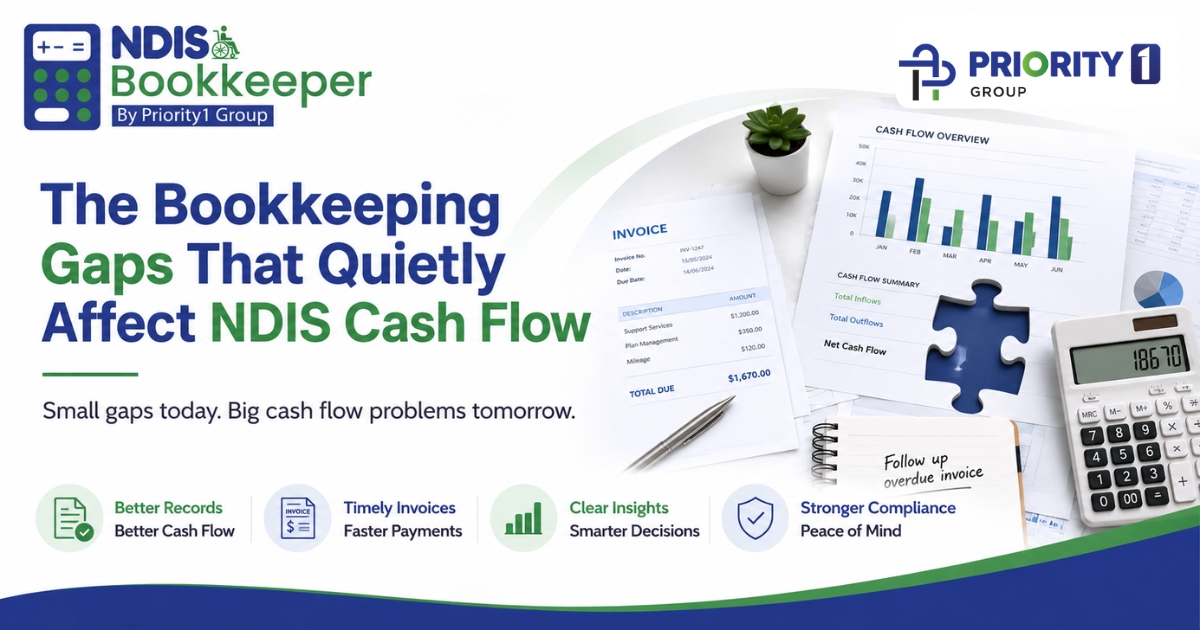
Cash flow pressure in an NDIS business does not always arrive suddenly. In many cases, it builds quietly through small gaps that are easy to overlook during a busy week. An invoice is sent later than planned. A payment is not followed up. A roster change is not reflected in payroll. A receipt is saved in the wrong place. None of these issues may seem serious on their own, but together they can affect how clearly a provider understands money coming in and going out.
For small and growing NDIS providers, this can feel frustrating. The business may be delivering quality support, staff may be working hard, and participants may be receiving services as planned. Yet the bank balance may still feel unpredictable. This is often where bookkeeping becomes more than an admin task. It becomes a practical tool for protecting financial stability.
Clean financial processes help providers see what is happening before it becomes stressful. When income, claims, invoices, wages, and expenses are recorded properly, providers can make decisions with more confidence. They can identify late payments earlier, understand cost pressure, and prepare for upcoming obligations instead of reacting at the last minute.
NDIS businesses often have more moving parts than general service businesses. Providers may need to manage participant billing, support worker wages, reimbursements, service agreements, supplier bills, software subscriptions, training costs, and compliance-related expenses. When these records are not updated regularly, the financial picture becomes harder to read.
Cash flow is not only about whether money is available today. It is about understanding what money is expected, what money is delayed, what expenses are due, and whether the business can comfortably meet its obligations. A provider may look at the bank account and feel stable, but that balance may not reflect unpaid invoices, upcoming payroll, tax obligations, or supplier payments.
This is why bookkeeping gaps matter. They create blind spots. A provider might believe the business is performing well because services are being delivered, but the records may show delayed claims, increasing wage costs, or unpaid invoices that need attention. Without timely information, these issues can stay hidden until they become harder to fix.
Most bookkeeping gaps do not happen because providers are careless. They usually happen because the team is busy, systems are stretched, or financial tasks are handled in between urgent operational work. Over time, small delays become habits, and those habits start affecting cash flow visibility.
These gaps are common in growing organisations. As participant numbers increase, the financial workload also increases. What worked when the provider was smaller may no longer be enough. A simple process may need stronger structure, clearer responsibilities, and more consistent review.
One of the most common reasons cash flow becomes tight is delayed invoicing. If services have been delivered but invoices are not raised promptly, the business has already carried the cost before receiving payment. This can become a major issue when wages, rent, software, insurance, and supplier bills still need to be paid on time.
For NDIS providers, delayed invoicing can also create confusion when records are reviewed later. If service delivery dates, participant details, invoice dates, and payment dates are not aligned, it becomes harder to understand where money is sitting in the process. The business may have income that is technically expected, but not yet visible in the bank account.
The solution is not just to send invoices faster. Providers also need a process that checks whether services delivered have been billed correctly, whether payments have been received, and whether anything remains outstanding. This creates a clearer link between service delivery and income.
If your team wants to strengthen the way records are organised before cash flow issues appear, this related guide on how clean financial records help NDIS providers is a helpful internal resource to connect with this topic.
Payroll is one of the largest and most important expenses for many NDIS providers. Support workers are central to service delivery, and paying them accurately and on time is essential. However, payroll can also create cash flow pressure when it is not closely connected to rosters, timesheets, service delivery, and billing.
If staff hours are not reviewed carefully, providers may overpay, underpay, or miss details that affect payroll accuracy. If payroll is processed before invoicing is fully checked, the business may pay wages before related income has been received. This does not always mean something is wrong, but it does mean cash flow needs to be monitored carefully.
Payroll mistakes can also create extra admin work. Corrections, follow-ups, adjustments, and staff questions all take time. When this happens regularly, the business loses both money visibility and team capacity. Providers who want to understand payroll risks more broadly may find this article on payroll mistakes that cost businesses time and money useful.
Cash flow issues often give small warnings before they become serious. The earlier providers notice these signs, the easier it is to respond with better processes and clearer reporting.
These signs do not always point to a major financial problem. Sometimes they simply show that the provider needs stronger bookkeeping routines. A business can be busy and growing, but still feel financially uncertain if income and expenses are not tracked clearly.
Monthly reports are useful because they turn financial activity into information the provider can understand. Instead of looking only at the bank balance, providers can review income, outstanding invoices, payroll costs, operating expenses, and overall trends. This helps them see whether cash flow pressure is temporary, seasonal, or connected to a deeper process issue.
Good reporting also helps providers ask better questions. Are invoices being raised quickly enough? Are certain costs increasing? Are payments taking longer than expected? Are wages aligned with service delivery? Are there expenses that should be reviewed? These questions are easier to answer when bookkeeping is current.
This is also where specialist support can reduce pressure. Some providers choose to outsource ndis bookkeepers when internal teams are stretched or when financial tasks need more consistency. The goal is not only to complete bookkeeping tasks, but to create clearer visibility so providers can make timely decisions.
Waiting until the end of the month to review financial records can create unnecessary pressure. By then, invoices may already be delayed, missing documents may be harder to find, and payroll questions may require more time to resolve. Month-end should be a review point, not the first time records are updated.
A better approach is to keep financial information moving throughout the month. This does not need to be complicated. It may involve weekly invoice checks, regular bank reconciliations, document uploads, payroll reviews, and follow-up on unpaid amounts. These small habits make month-end smoother and reduce the chance of surprises.
When providers treat bookkeeping as an ongoing routine, cash flow becomes easier to understand. The business can respond earlier, rather than waiting until pressure builds.
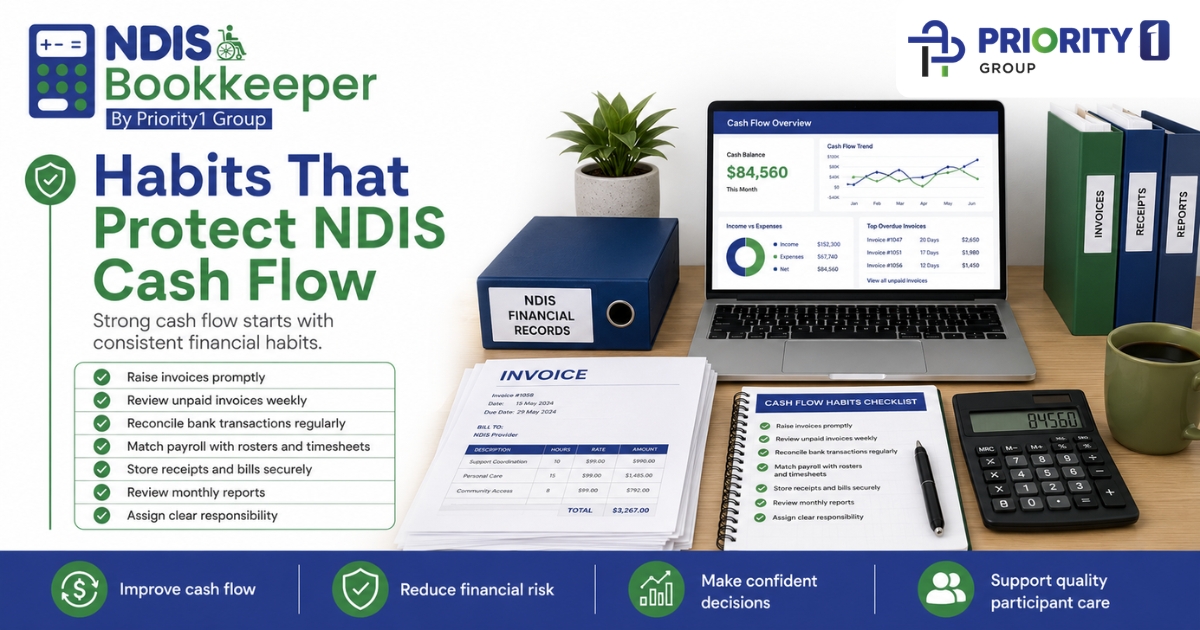
Strong cash flow is supported by consistent habits. Providers do not need a complicated system, but they do need a process that is followed regularly and understood by the team.
These habits help prevent confusion. They also make financial conversations easier between business owners, managers, bookkeepers, and accountants. Everyone can work from clearer information instead of chasing details after the fact.
NDIS providers need financial support that understands the environment they operate in. Their bookkeeping is connected to participant services, workforce management, compliance requirements, and business sustainability. A general approach may not always capture the practical details that affect provider cash flow.
This is why bookkeeping for ndis providers should focus on more than data entry. It should help providers understand income timing, payroll pressure, unpaid invoices, reporting trends, and the financial impact of growth. When bookkeeping is done with sector awareness, it becomes more useful for everyday decision-making.
Specialist support also helps reduce the emotional pressure that many providers carry. Financial uncertainty can make business owners feel like they are always catching up. A structured bookkeeping process gives them a clearer view of what needs attention and what is already under control.
The purpose of identifying bookkeeping gaps is not to blame the team. In most NDIS businesses, people are already doing their best with limited time and competing priorities. The aim is to notice where the process is becoming stretched and improve it before it affects cash flow further.
Better systems may include clearer invoice workflows, regular reconciliation, improved payroll checks, digital document storage, monthly reporting, and scheduled reviews. Even small improvements can make a noticeable difference. When the provider knows what has been billed, what has been paid, what is outstanding, and what costs are coming, the business feels more manageable.
Cash flow clarity gives providers space to plan. It supports better decisions around hiring, service growth, technology, admin support, and compliance preparation. It also gives leaders more confidence when discussing the business with accountants, advisors, or internal teams.
Bookkeeping gaps can quietly affect NDIS cash flow long before they become obvious. Late invoicing, unclear payment tracking, payroll mismatches, missing documents, and delayed reporting can all make it harder for providers to understand their financial position.
The good news is that these gaps can be improved with consistent routines, clear responsibilities, regular reporting, and support that understands the needs of NDIS businesses. For small and growing providers, the goal is not to make bookkeeping complicated. The goal is to make it clear, current, and useful.
With stronger bookkeeping systems, providers can reduce financial uncertainty, protect cash flow, and make decisions with greater confidence. For businesses that want practical support with cleaner records, payroll visibility, and financial clarity, NDIS Bookkeeping by Priority1 Group can help create a more organised foundation.