
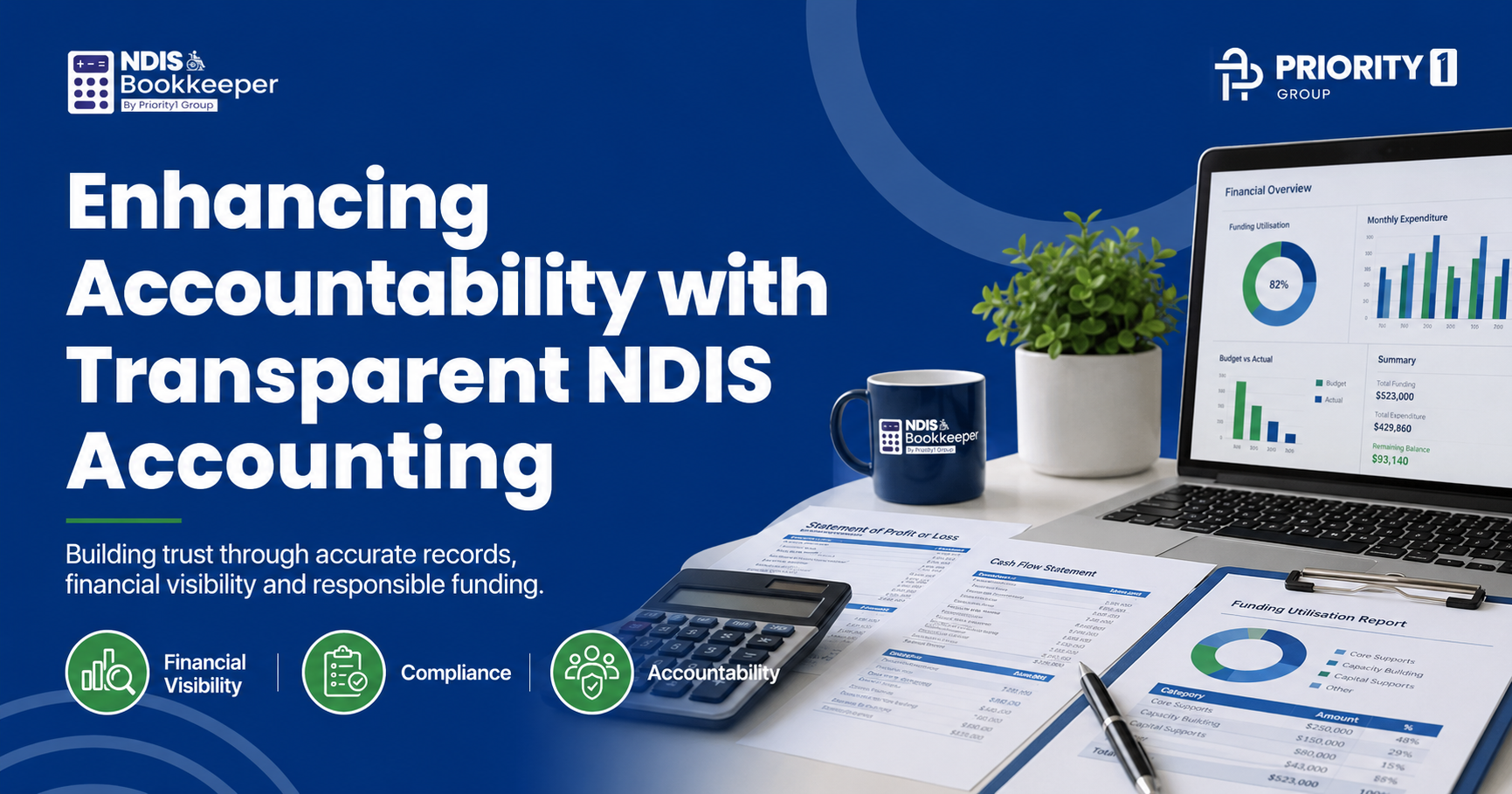
Accountability has become one of the most important pillars of success within the NDIS sector. While participant outcomes remain the primary focus, providers must also demonstrate that they are managing funding responsibly, maintaining compliance, and operating with integrity.
The NDIS landscape continues to evolve, bringing new expectations around governance, reporting, and financial oversight. Participants, families, support coordinators, auditors, and regulatory bodies all expect providers to maintain clear and accurate records that reflect responsible use of funding.
Transparent accounting is not simply a finance function. It is a framework that helps organisations build trust, improve decision-making, identify risks early, and ensure long-term sustainability. Providers that invest in strong financial practices often find themselves better prepared to navigate industry changes while continuing to deliver quality supports.
In a sector where financial accountability directly impacts service delivery, transparent accounting provides the visibility needed to operate confidently and responsibly.
The NDIS has transformed the disability support industry by giving participants greater choice and control over their services. With this flexibility comes increased responsibility for providers to maintain accurate records and demonstrate financial accountability.
Transparency benefits all stakeholders involved in the support journey. Participants gain confidence that services are being delivered appropriately. Management teams gain visibility into business performance. Regulators receive assurance that funding is being managed correctly.
Financial transparency helps providers:
These outcomes contribute to a stronger organisation that is better equipped to deliver consistent participant support.
Many operational challenges stem from a lack of financial visibility. When leaders cannot clearly see how funds are being allocated, where costs are increasing, or how services are performing financially, decision-making becomes more difficult.
Financial visibility allows providers to understand:
With reliable financial information available, management can make informed decisions based on facts rather than assumptions.
Visibility also supports long-term planning by helping providers forecast future requirements, allocate resources effectively, and prepare for changing market conditions.
Every provider follows a financial journey that begins well before revenue is received. Participant onboarding, service delivery, payroll processing, invoicing, claim management, reconciliations, reporting, and compliance activities are all connected.
When one part of the process breaks down, it can affect the entire organisation.
Understanding this interconnected process is essential for maintaining accountability and operational efficiency. Providers interested in learning more about how these financial processes work together can explore the article on the financial lifecycle of NDIS services, which explains how financial systems support sustainable service delivery.
By understanding the complete financial journey, providers can identify weaknesses, improve processes, and create stronger operational foundations.
As providers grow, financial management often becomes increasingly complex. New participants, larger teams, additional compliance obligations, and changing regulations all contribute to increased administrative demands.
Common challenges include:
Without structured systems in place, these challenges can create inefficiencies and increase organisational risk.
Strong financial accountability helps providers overcome these obstacles while maintaining focus on participant outcomes.
Reliable systems create consistency, accuracy, and confidence.
As financial responsibilities become more complex, many providers choose to work with an Outsourced Bookkeeper to strengthen reporting processes, improve financial visibility, and ensure key financial information remains accurate and accessible. Access to specialist support can help organisations maintain accountability while reducing administrative pressures on internal teams.
Rather than relying on manual processes or fragmented records, providers should implement structured financial systems that support transparency and accountability across all areas of the organisation.
Effective systems typically include:
When systems are documented and followed consistently, organisations reduce the likelihood of errors and improve overall financial performance.
Reliable systems also make it easier to train new staff and maintain continuity during periods of growth or change.
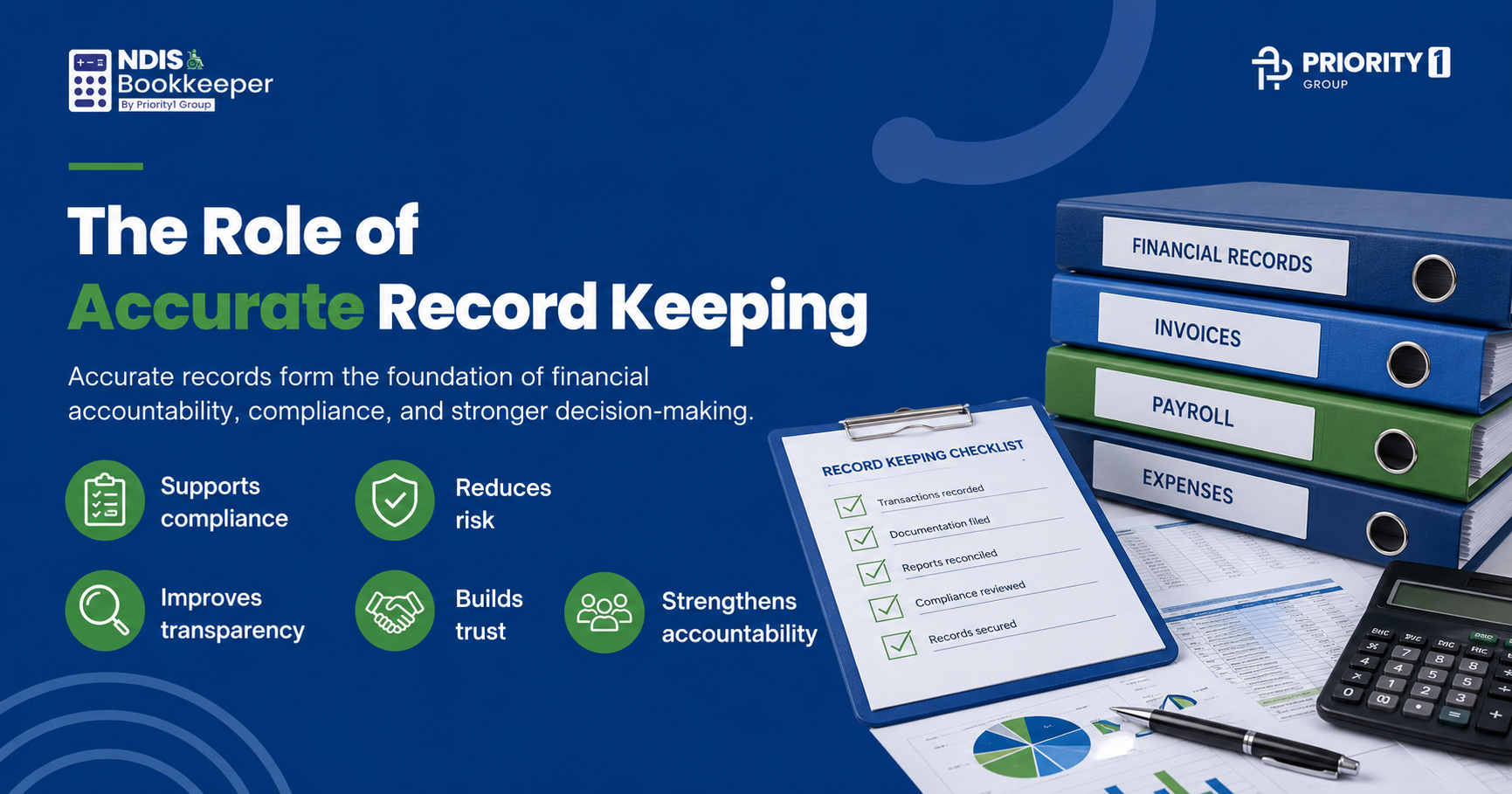
Accurate records form the foundation of transparent accounting. Every transaction should be supported by documentation that clearly explains its purpose and financial impact.
Good record keeping provides several benefits:
Maintaining accurate records is not simply about meeting compliance obligations. It is about ensuring the organisation has access to trustworthy information whenever decisions need to be made.
Providers that prioritise record keeping often spend less time resolving issues and more time focusing on service delivery.
Financial confidence allows organisations to move forward with certainty. Leaders who trust their financial information are more likely to make proactive decisions that support sustainable growth.
Many successful providers recognise that effective NDIS bookkeeping extends beyond data entry and reconciliations. It creates a structured financial environment where management can monitor performance, identify trends, and make informed decisions with confidence.
When financial systems are operating effectively, organisations can:
Confidence in financial information creates confidence throughout the organisation.
Technology has significantly improved financial management across the NDIS sector.
Modern accounting platforms provide real-time visibility into financial performance while reducing manual workloads and administrative errors.
Benefits of technology include:
Technology also supports accountability by creating clear audit trails that show how transactions were processed and approved.
While technology is a powerful tool, it delivers the greatest value when combined with strong processes, clear policies, and experienced financial oversight.
Accountability should not sit solely within the finance department. Every team member contributes to maintaining financial integrity through accurate documentation, timely communication, and adherence to organisational processes.
Creating a culture of responsibility involves:
When accountability becomes part of the organisational culture, financial management becomes more effective and sustainable.
This culture helps reduce errors, improve communication, and strengthen organisational resilience.
Growth brings opportunities, but it also introduces new financial complexities.
Organisations that plan for growth require accurate information, reliable reporting, and strong financial controls. Without these foundations, expansion can create unnecessary risks and operational pressures.
Providers looking to strengthen their financial foundations can gain valuable insights from the article on building financial confidence, which explores practical strategies for improving financial clarity and organisational stability.
Preparing for growth requires more than ambition. It requires confidence in the systems and information that support decision-making.
Strong financial foundations enable organisations to pursue opportunities while maintaining control and accountability.
As financial requirements become more complex, many providers seek specialist support to strengthen accountability and improve operational efficiency.
A dedicated NDIS bookkeeper can help providers maintain accurate records, improve reporting quality, monitor compliance obligations, and support strategic financial management.
Professional expertise often helps organisations:
Having access to specialist knowledge allows providers to focus on participant outcomes while maintaining confidence in their financial operations.
Transparent accounting is about more than numbers. It is about creating trust, strengthening accountability, supporting compliance, and enabling informed decision-making throughout the organisation.
Providers that invest in financial visibility, accurate record keeping, reliable systems, and strong governance are better positioned to navigate industry changes while continuing to deliver high-quality participant support.
As expectations around accountability continue to increase, transparent financial management will remain a critical component of long-term success within the NDIS sector.
For organisations seeking specialist financial expertise tailored to the disability sector, NDIS Bookkeeper by Priority1 Group provides professional support designed to strengthen accountability, improve financial visibility, and help providers build a sustainable future.